If you freelance, consult, or do contract work, there is one tax document that will show up in your mailbox every January: the 1099 form. For many independent workers, that envelope triggers a mix of confusion and mild dread. What exactly is a 1099 form? What does it mean for your taxes? And what happens if you never got one but definitely earned money last year?
This guide answers every question freelancers have about the 1099 — clearly, completely, and without the tax jargon.
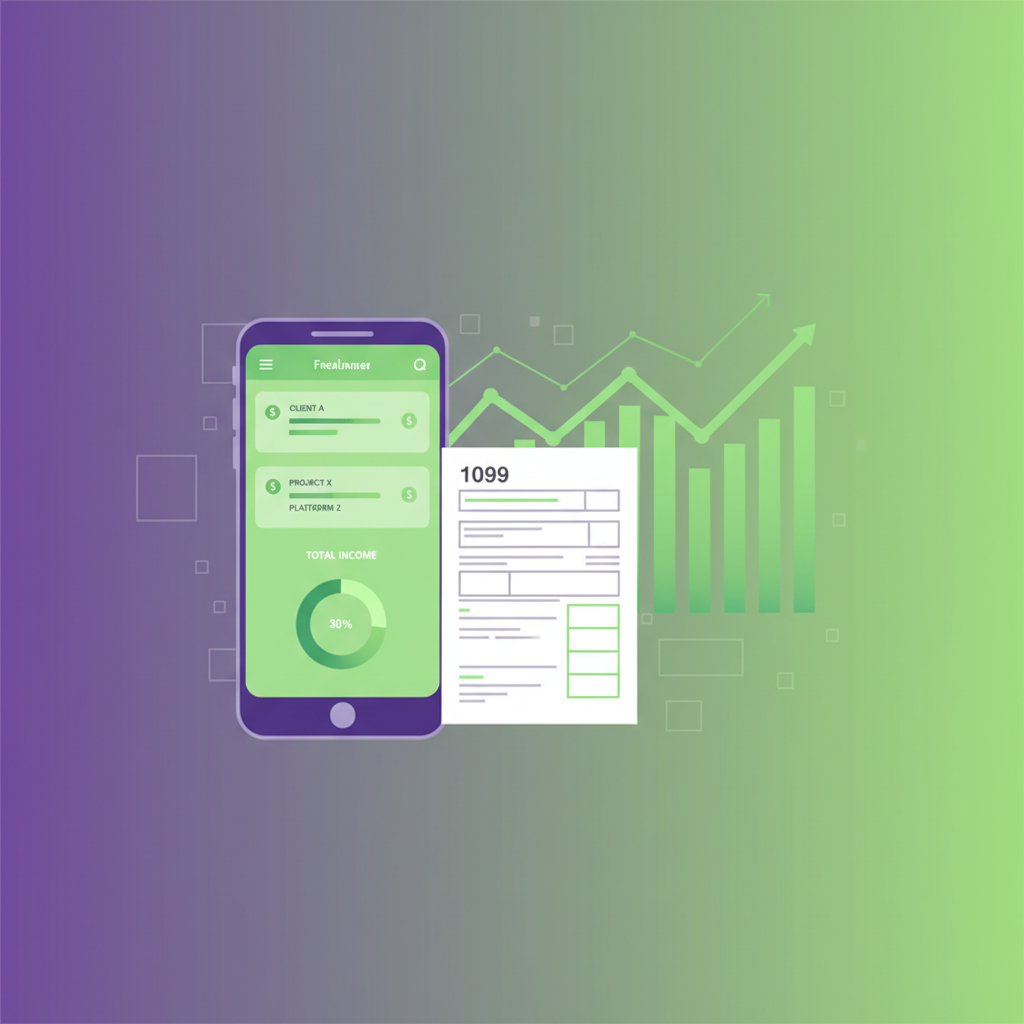
What Is a 1099 Form?
A 1099 form is an IRS information return — a document that reports income you received from sources other than a traditional employer. Think of it as the freelancer’s version of a W-2. While a W-2 reports wages and salary, a 1099 reports non-employee compensation, interest, dividends, rent, and other payments.
There are more than 20 types of 1099 forms, but as a freelancer or independent contractor, you will most commonly encounter two:
- 1099-NEC (Non-Employee Compensation): This is the main form for freelancers and independent contractors. If a business paid you $600 or more for services during the calendar year, they are required to send you a 1099-NEC by January 31 of the following year. The IRS reinstated this separate form in 2020; before that, this income was reported on the 1099-MISC.
- 1099-MISC (Miscellaneous Income): This form covers other types of non-employment income — rent payments, prizes and awards, royalties, attorney fees, and certain other categories. Freelancers occasionally receive a 1099-MISC for specific types of payments, but the 1099-NEC is now the standard for contract work.
Both forms are filed with the IRS and sent to you. The IRS cross-references what businesses report paying you with what you report earning — so accuracy matters.
Who Receives a 1099-NEC?
You will receive a 1099-NEC if all of the following are true:
- You provided services as an independent contractor (not as an employee)
- The business or individual who paid you is not your employer
- You were paid $600 or more in the calendar year from a single payer
- Payment was made in cash, check, or electronic transfer (not credit card — those are reported differently)
This covers a wide range of workers: graphic designers, writers, photographers, web developers, consultants, virtual assistants, rideshare drivers, tutors, coaches, and anyone else who invoices clients for services. Even if you have a full-time job, any freelance income over $600 from a single client will generate a 1099-NEC.
Corporations are generally exempt from 1099-NEC reporting, but LLCs taxed as sole proprietorships or partnerships typically are not.
What to Do When You Receive a 1099
Step one: verify the numbers. Compare the amount on the 1099 against your own records — your invoices, bank deposits, or payment app history. Errors happen. If the amount is wrong, contact the payer and ask for a corrected 1099 before you file. If you cannot get a correction in time, report the income accurately on your return and attach an explanation.
Step two: keep it safe. The 1099 is an official tax document. File it with your other tax records.
Step three: report it. You report 1099-NEC income on Schedule C (Profit or Loss from Business) of your federal tax return. From there, net profit flows to your 1040 and determines how much self-employment tax and income tax you owe.
For official instructions on 1099-NEC reporting, see IRS Publication on Form 1099-NEC.
What If You Didn’t Receive a 1099 But Earned Income?
Here is a critical rule many new freelancers get wrong: you must report all income you earned, whether or not you received a 1099.
There are several reasons you might not receive a 1099:
- You earned less than $600 from a single client
- The client paid via credit card or PayPal (reported on a 1099-K instead, with a different threshold)
- The client simply forgot or didn’t file
- The form got lost in the mail
None of these reasons exempt you from reporting the income. The IRS expects you to self-report all earnings on Schedule C, regardless of whether a 1099 exists. Underreporting income — even innocently — can trigger an audit, penalties, or interest charges.
This is exactly why keeping meticulous records throughout the year is so important. If you track every invoice and payment as you go, there is no guesswork come January.
How 1099 Income Affects Your Taxes
Wondering how 1099 income stacks up against a traditional W-2 paycheck? Our guide to 1099 vs W-2 tax differences for freelancers breaks down the full picture.
Freelance income is taxed differently from W-2 wages in two important ways:
Self-Employment Tax: Employees split Social Security and Medicare taxes with their employer — each paying 7.65%. As a self-employed person, you pay both halves: the full 15.3% on your net self-employment income (up to the Social Security wage base). You can deduct half of this self-employment tax when calculating your adjusted gross income, which provides some relief.
Quarterly Estimated Taxes: Traditional employees have taxes withheld from each paycheck. For a step-by-step walkthrough of staying penalty-free, see our Q3 estimated tax payments guide for freelancers. Freelancers don’t. Instead, you are expected to pay estimated taxes four times a year — in April, June, September, and January. Missing or underpaying estimated taxes can result in an underpayment penalty, even if you pay in full when you file your return.
For 2026, the quarterly estimated tax due dates are:
- Q1 (January–March): April 15, 2026
- Q2 (April–May): June 16, 2026
- Q3 (June–August): September 15, 2026
- Q4 (September–December): January 15, 2027
The Q2 deadline is coming up fast. Tracking your income accurately now means you will not be caught off guard in June.
Business expenses — software subscriptions, home office costs, equipment, professional development — are deductible against your 1099 income on Schedule C, reducing what you owe. Keeping receipts for everything is not optional; it is a direct path to a lower tax bill.
How BudgetX Helps Track 1099 Income Year-Round
The biggest mistake freelancers make is treating taxes as a once-a-year problem. When you wait until January to sort through months of transactions, invoices, and receipts, it is slow, stressful, and error-prone.
BudgetX is designed for exactly this challenge. With BudgetX, you can:
- Scan receipts instantly — photograph any business expense and BudgetX reads and categorizes it automatically
- Track income by client — log payments as you receive them so your records match your 1099s at year-end
- Organize deductions automatically — every categorized expense is a potential deduction, sorted and ready when you need it
- Export for tax filing — generate clean income and expense reports your accountant or tax software can use directly
Instead of scrambling in April, you close out each quarter knowing exactly what you earned, what you spent, and what you owe. That clarity makes quarterly estimated tax payments accurate — and avoids penalties.
With the Q2 estimated tax deadline on June 16, 2026 just around the corner, there’s no better time to get your income tracking organized.
Take the guesswork out of 1099 season.
BudgetX automatically tracks your freelance income and business expenses so you’re always ready for tax time — no spreadsheets, no stress.