Why the Traditional 50/30/20 Rule Needs a Freelance Makeover
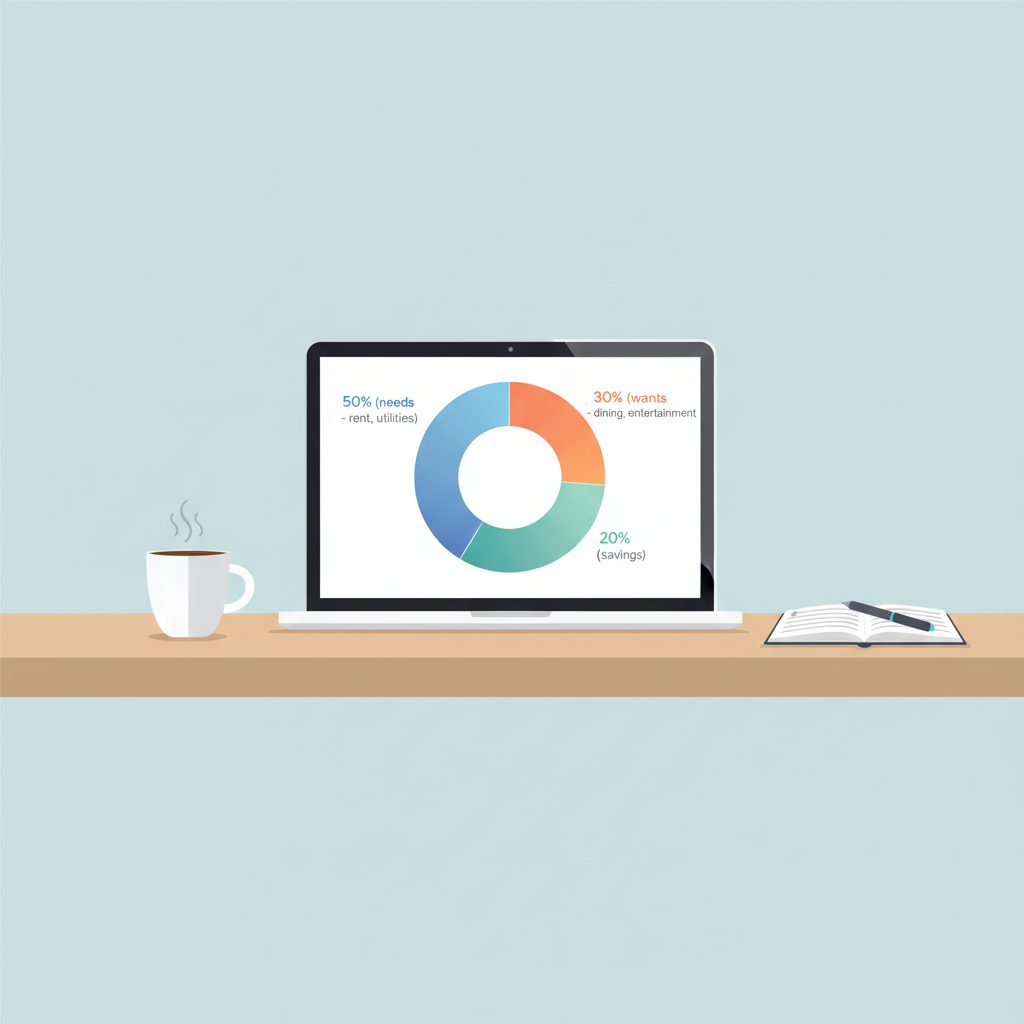
If you’ve ever Googled “how to budget,” you’ve probably stumbled across the 50/30/20 rule. It’s elegant in its simplicity: 50% of your income goes to needs, 30% to wants, and 20% to savings. Simple, right?
But here’s the problem—that rule was designed for people with steady paychecks. When you’re a freelancer, your income bounces around like a kangaroo on espresso. Some months you’re swimming in client payments; other months you’re wondering if ramen counts as a tax deduction.

The 50/30/20 framework adapted for the freelance lifestyle
The good news? The 50/30/20 rule can work for freelancers—you just need to tweak the formula. Let’s break it down.
What Is the 50/30/20 Rule?
Popularized by Senator Elizabeth Warren in her book All Your Worth, the 50/30/20 rule is a budgeting framework that divides your after-tax income into three buckets:
- 50% Needs: Rent, utilities, groceries, insurance, minimum debt payments, and anything essential to survive
- 30% Wants: Dining out, entertainment, hobbies, subscriptions, and anything that makes life enjoyable but isn’t essential
- 20% Savings: Emergency fund, retirement accounts, extra debt payments, and investments
The beauty is in the balance—you’re not depriving yourself (that 30% for wants keeps life fun), but you’re also building security (that 20% savings keeps your future self happy).
The Freelance Problem: Your Income Isn’t Predictable
For a W-2 employee making $5,000/month, the math is straightforward: $2,500 for needs, $1,500 for wants, $1,000 for savings. Easy.
But freelancers face a different reality. You might earn $8,000 one month and $2,000 the next. That unpredictability makes percentage-based budgeting feel impossible.
Here’s how to adapt:
1. Calculate Your “Baseline Month”
Instead of using your actual (variable) income each month, use your minimum reliable monthly income—the lowest amount you can reasonably expect to earn during a slow month.
For most freelancers, this is the average of your three lowest-earning months from the past year. This becomes your “baseline” for the 50/30/20 calculation.
Example: If your lowest three months were $2,500, $2,800, and $3,200, your baseline is approximately $2,833.
2. Apply 50/30/20 to Your Baseline
Using the $2,833 baseline:
- Needs (50%): $1,417 — Your non-negotiable monthly expenses
- Wants (30%): $850 — Discretionary spending
- Savings (20%): $567 — Emergency fund, taxes, retirement
This ensures you can survive even your slowest months while still building savings.
3. The “Windfall Strategy” for High-Income Months
When you have a great month—say you land a $5,000 project—where does the extra go?
The Freelance Priority Order:
- Tax Reserve (15-30% of gross): Set aside taxes first. Always. The IRS expects quarterly payments, and penalties add up fast.
- Emergency Fund: Build 3-6 months of baseline expenses before anything else.
- Retirement: Max out your SEP-IRA or Solo 401(k) contributions.
- Business Reinvestment: Upgrade equipment, invest in marketing, take courses.
- Fun Money: Now treat yourself—you’ve earned it.
Separating Business vs. Personal: A Critical Distinction
Freelancers often blur the line between business and personal expenses. The 50/30/20 rule should apply to your personal budget—after you’ve accounted for business costs.
Recommended structure:
- Business expenses first: Software subscriptions, equipment, coworking space, professional services
- Pay yourself a “salary”: Transfer a set amount to your personal account monthly
- Apply 50/30/20 to your salary: This becomes your personal budget
This separation simplifies tax season and keeps your personal finances stable regardless of business fluctuations.
How CashPulse Makes the 50/30/20 Rule Effortless
The hardest part of any budget isn’t the math—it’s the tracking. You can know your percentages cold, but if you’re not categorizing expenses in real-time, you’re flying blind.
CashPulse solves this by automatically categorizing your spending, so you can see at a glance whether you’re within your 50/30/20 targets:
- Automatic expense tracking: No more manual data entry or receipt hoarding
- Real-time category insights: Instantly see if you’re over budget on wants
- Irregular income handling: Tools designed for freelancers, not employees
- Tax preparation: Separate business and personal expenses with ease
When your expenses are organized automatically, sticking to the 50/30/20 rule becomes second nature—not a monthly spreadsheet marathon.
Common Freelance Budgeting Mistakes (And How to Avoid Them)
Mistake #1: Using Average Income Instead of Baseline
If your income ranges from $2,000 to $10,000, averaging to $6,000 and budgeting for $3,000 in needs is a recipe for disaster during slow months. Always use your baseline for fixed expenses.
Mistake #2: Forgetting Quarterly Taxes
That 20% savings bucket? A chunk of it should be reserved for taxes. Most freelancers need to set aside 25-30% of net income for federal and state taxes combined. NerdWallet’s quarterly tax guide walks through the calculations.
Mistake #3: Treating All “Needs” Equally
Not all needs are fixed. Rent is non-negotiable, but groceries can flex. Consider separating “fixed needs” (same amount every month) from “variable needs” (can be adjusted) within your 50% bucket.
Adjusting the Percentages: When the Default Doesn’t Fit
The 50/30/20 split isn’t gospel. Adjust based on your reality:
- High cost of living? Try 60/20/20 (more for needs, less for wants)
- Aggressive debt payoff? Try 50/20/30 (more for debt payments)
- Building an emergency fund fast? Try 50/15/35 (minimal wants, maximum savings)
The key is intentionality—knowing where every dollar goes before the month starts.
Final Thoughts: Flexibility Is the New Stability
Freelancing means embracing uncertainty. But your budget shouldn’t add to that uncertainty—it should be the anchor that keeps you grounded.
The modified 50/30/20 rule gives you a framework that works with your irregular income, not against it. By calculating your baseline, prioritizing tax reserves, and separating business from personal finances, you can build financial stability even when your income bounces around.
And with tools like CashPulse handling the tracking automatically, you can spend less time managing money and more time doing what you love—your actual work.
Ready to take control of your freelance finances? Download CashPulse and start tracking your 50/30/20 budget today.