The Short Answer: 3 to 7 Years (But It Depends)
If you’re wondering how long to keep receipts, the general rule is 3 to 7 years — but the exact timeframe depends on what the receipt is for and your situation. The IRS has specific guidelines, and keeping records too long can be just as problematic as not keeping them long enough.
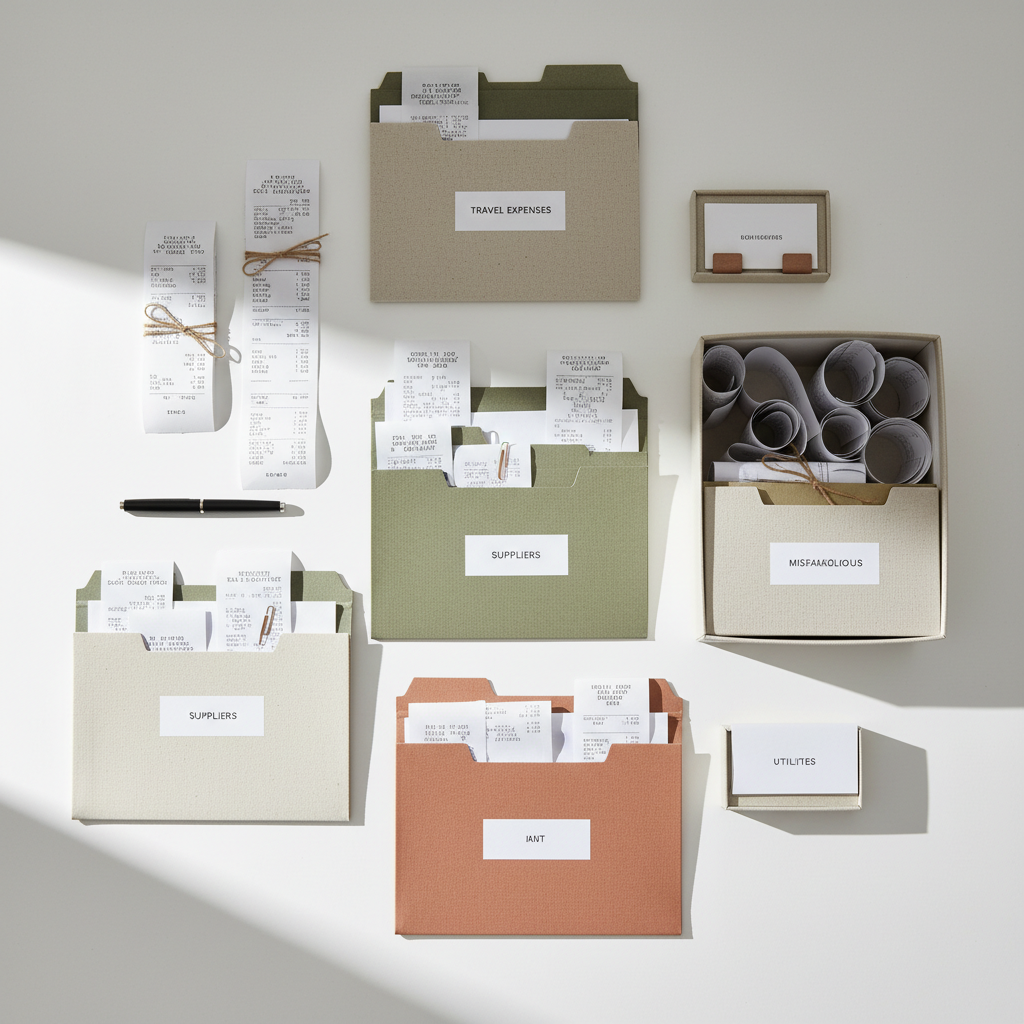
In this guide, we’ll break down exactly how long you need to keep different types of receipts, why those timeframes exist, and how to organize them without drowning in paper.
Why Receipt Retention Matters
Receipts serve as proof of purchase for:
- Tax deductions — Business expenses, charitable donations, medical costs
- Warranty claims — Proof of purchase for defective products
- Expense reimbursements — Employer or client expense reports
- Audit protection — Documentation if the IRS questions your return
Without receipts, you risk losing legitimate deductions or facing penalties if audited. But hoarding receipts indefinitely creates clutter and makes it harder to find what you actually need.
IRS Receipt Retention Guidelines
The IRS recommends keeping records for 3 years from the date you filed your original return — or 2 years from the date you paid the tax, whichever is later. However, there are important exceptions:
| Situation | Keep Records For |
|---|---|
| Standard tax return | 3 years |
| You underreported income by more than 25% | 6 years |
| You claimed a loss from worthless securities | 7 years |
| You never filed a return | Indefinitely |
| You filed a fraudulent return | Indefinitely |
Source: IRS Record Retention Guidelines
Receipt Retention by Category
Business Expense Receipts
Keep for: 3-7 years
Business receipts are the most critical. The IRS can audit returns up to 3 years back, but if they suspect substantial errors, that extends to 6 years. Most accountants recommend keeping business receipts for 7 years to be safe.
Charitable Donation Receipts
Keep for: 3-7 years
Cash donations under $250 only require a bank record, but donations over $250 need a written acknowledgment from the charity. Keep these with your tax records for at least 3 years.
Medical Expense Receipts
Keep for: 3-7 years
If you deduct medical expenses, keep receipts for 7 years. If you have a Health Savings Account (HSA) or Flexible Spending Account (FSA), keep records until you’re certain you won’t need them for reimbursement disputes.
Investment and Property Receipts
Keep for: 7 years after sale
Keep purchase receipts for stocks, real estate, and other investments until 7 years after you sell the asset. You’ll need them to calculate capital gains and prove your cost basis.
Home Improvement Receipts
Keep for: 7 years after selling your home
Home improvements add to your cost basis, reducing capital gains tax when you sell. Keep these receipts for as long as you own the home, plus 7 years after the sale.
Warranty Receipts
Keep for: Duration of warranty + 1 year
Appliances, electronics, and vehicles come with warranties ranging from 1-10 years. Keep these receipts in an easily accessible folder until the warranty expires.
Large Purchases (Insurance Purposes)
Keep for: As long as you own the item
Jewelry, art, furniture, and other valuables should have receipts kept indefinitely for insurance claims. Take photos and store receipts with your home inventory.
When Can You Safely Shred Receipts?
You can safely dispose of receipts when:
- The retention period has passed (3-7 years depending on category)
- The warranty has expired
- You no longer own the asset
- The receipt contains no tax-deductible information
Exception: Some receipts (everyday coffee, gas, small purchases) can be discarded immediately if they’re not tax-related and you don’t need them for returns or warranties.
The Modern Approach: Go Digital
Keeping paper receipts for 7 years is impractical. They fade, get lost, and take up space. The IRS accepts digital copies as valid documentation — a scanned or photographed receipt is legally equivalent to the original.
This is where receipt scanning apps become essential. With BudgetX, you can:
- Scan receipts in 3 seconds with AI-powered extraction
- Auto-categorize expenses for tax preparation
- Export reports in PDF, CSV, or Excel format
- Store receipts securely in the cloud indefinitely
Digital storage means you never lose a receipt, can search by date or category, and have everything organized when tax time comes.
Best Practices for Receipt Organization
- Scan immediately — Don’t let receipts pile up. Scan them the day you get them.
- Use consistent categories — Meals, travel, office supplies, equipment, etc.
- Back up to the cloud — Ensure your digital records are safe from hardware failure.
- Separate personal and business — Keep business receipts in a dedicated system.
- Review annually — Archive or delete receipts past the retention period each year.
Key Takeaways
- Standard rule: Keep tax-related receipts for 3-7 years
- Investments and property: Keep until 7 years after you sell
- Warranties: Keep until warranty expires
- Go digital: The IRS accepts scanned receipts — use an app to organize
- When in doubt: 7 years is the safest retention period for most documents
Ready to Organize Your Receipts?
Stop digging through shoeboxes and start tracking expenses the smart way. Download BudgetX free and turn receipt chaos into organized, tax-ready records.