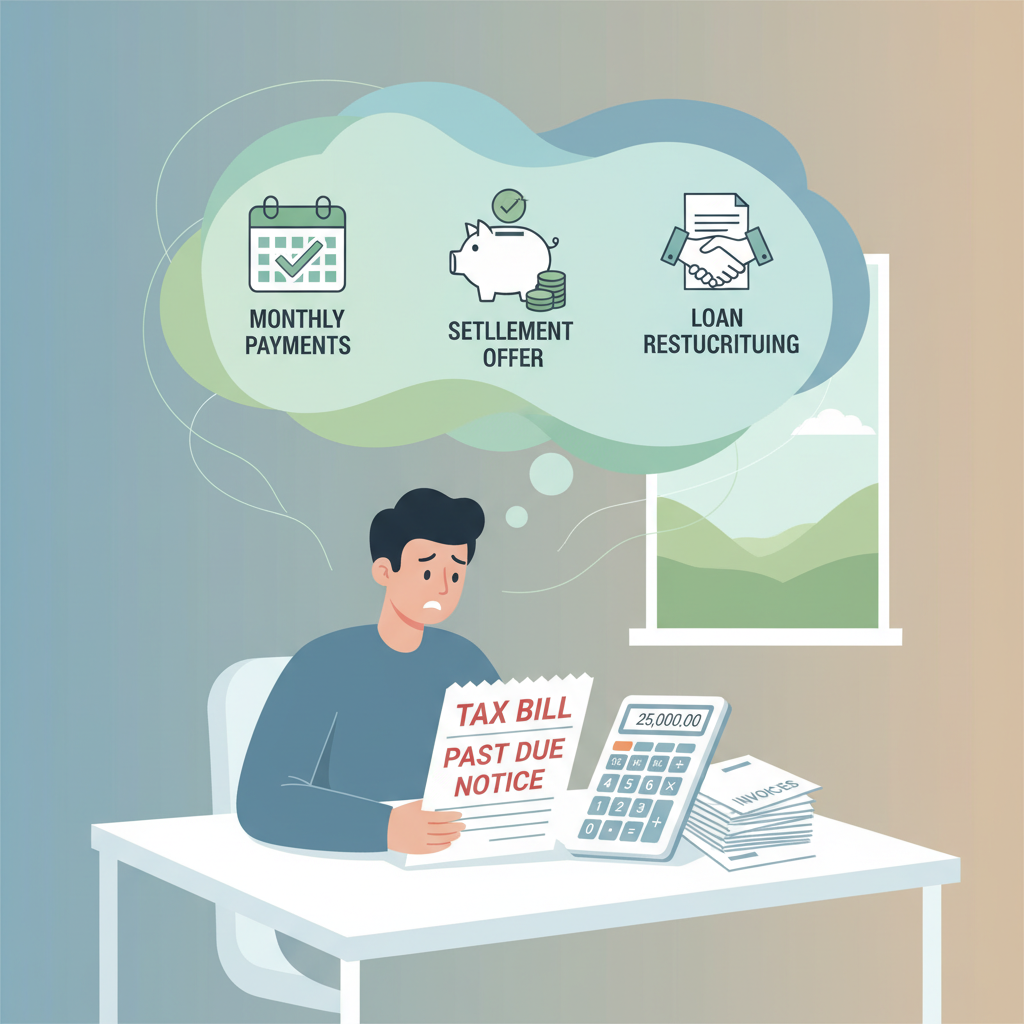
You Owe Taxes — Take a Deep Breath
Opening your tax return to find a balance due can be stressful, especially if you don’t have the cash on hand. But here’s the most important thing: you have options, and ignoring the IRS is the worst one. Let’s walk through what to do when you owe and can’t pay.
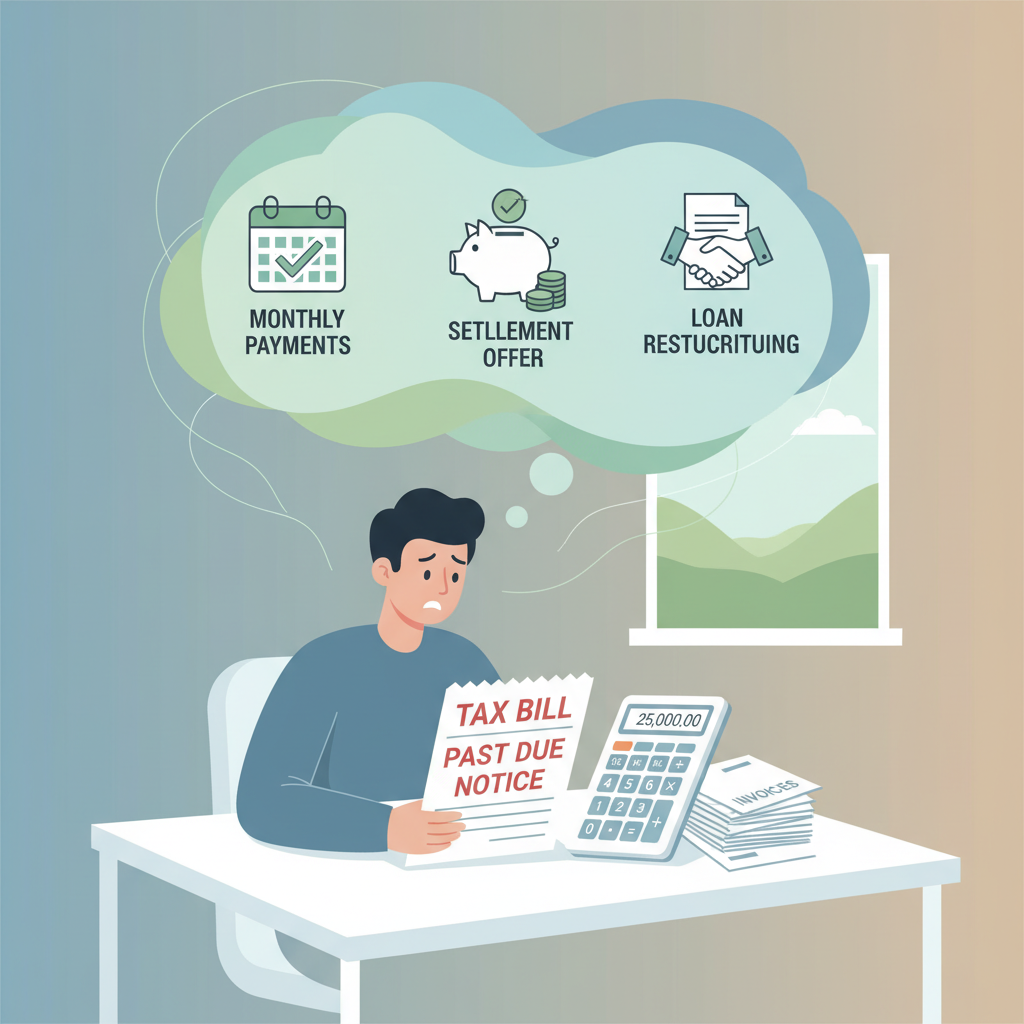
Rule #1: File Your Return Anyway
This is critical: File your tax return on time, even if you can’t pay a dime.
The failure-to-file penalty is 5% per month of unpaid taxes. The failure-to-pay penalty is only 0.5% per month — that’s 10x less. By filing on time, you avoid the massive failure-to-file penalty and buy yourself time to arrange payment.
IRS Payment Options Overview
The IRS offers several ways to pay over time. Most can be set up online in minutes:
Option 1: Short-Term Payment Plan (180 Days)
If you can pay within 180 days, request a short-term extension. You’ll still owe interest and the failure-to-pay penalty, but there’s no setup fee.
- Best for: Temporary cash flow issues
- Setup: Apply online at IRS.gov/payments
- Cost: No setup fee; penalties and interest still apply
Option 2: Long-Term Installment Agreement
If you need more time, set up a monthly payment plan. You choose the payment amount and day of the month.
- Best for: Those who can make regular monthly payments
- Setup: Apply online or file Form 9465
- Cost: Setup fee ($31 for online, higher for paper/direct debit discounts apply)
- Eligibility: Must owe $50,000 or less (tax, penalties, interest combined)
Pro tip: Set up direct debit to avoid missing payments and reduce setup fees.
Option 3: Offer in Compromise
An Offer in Compromise (OIC) lets you settle your tax debt for less than the full amount. This is for people who genuinely cannot pay their full tax liability.
- Best for: Significant financial hardship
- Eligibility: Strict requirements — must prove you cannot pay the full amount
- Cost: $186 non-refundable application fee; requires detailed financial disclosure
- Process: Takes several months; IRS accepts about 40% of offers
Warning: OIC is complex. Consider working with a tax professional.
Option 4: Currently Not Collectible Status
If paying would cause significant hardship (inability to pay basic living expenses), the IRS may temporarily pause collection. Your debt doesn’t disappear, but collection activities stop.
- Best for: Severe financial hardship
- Process: Contact IRS and request CNC status; provide financial documentation
- Effect: Penalties and interest still accrue; IRS may file a tax lien
Understanding Penalties and Interest
Even with a payment plan, you’ll owe:
- Failure-to-pay penalty: 0.5% per month of unpaid tax (max 25%)
- Interest: Compounds daily at the federal short-term rate plus 3%
The sooner you pay, the less you owe in penalties and interest.
How to Apply for a Payment Plan
The fastest way is online:
- Go to IRS.gov/payments
- Click “Apply for a Payment Plan”
- Enter your information (SSN, date of birth, filing status)
- Choose your plan type and payment amount
- Set up direct debit or monthly payments
You’ll receive confirmation immediately. Set up takes about 15-30 minutes.
What NOT to Do
- Don’t ignore IRS notices. Each notice has a response deadline. Missing deadlines triggers harsher collection actions.
- Don’t borrow from retirement accounts. Early withdrawal penalties make this expensive.
- Don’t use high-interest credit cards. IRS interest rates are often lower than credit card rates.
- Don’t fall for tax relief scams. “Pennies on the dollar” promises are usually predatory. The IRS offers legitimate programs directly.
When to Contact a Professional
Consider consulting a tax professional (enrolled agent, CPA, or tax attorney) if:
- You owe more than $25,000
- The IRS has filed a lien or levy
- You’re considering an Offer in Compromise
- You have multiple years of unfiled returns
- You’re facing significant penalties beyond normal accrual
The Bottom Line
When you owe the IRS and can’t pay:
- File your return on time — avoid the 5% failure-to-file penalty
- Pay what you can — even a partial payment reduces penalties
- Apply for a payment plan — most qualify for installment agreements
- Respond to notices — communicate with the IRS
- Pay off the balance as soon as possible — minimize interest and penalties
The IRS is more flexible than you might expect — but only if you engage with them. Ignoring the problem makes it worse.
Download BudgetX free to scan receipts and track expenses year-round, so next year’s tax bill is no surprise.