Small Business Receipt Deductions: The Ultimate 2026 Tax Guide
If you run a small business, every receipt in your drawer or inbox is potential money back in your pocket. Small business receipt deductions are one of the most powerful — and most underutilized — tools available to entrepreneurs in 2026. Yet millions of business owners leave thousands of dollars on the table each year simply because they don’t track their receipts properly or don’t know what qualifies as a deductible business expense. This guide cuts through the confusion so you can claim every dollar you’ve earned.
What Receipts Are Tax-Deductible for Small Businesses?
According to the IRS, a business expense is deductible if it is both ordinary (common and accepted in your industry) and necessary (helpful and appropriate for your business). This means a wide range of everyday purchases may qualify as business receipt tax deductions in 2026 — as long as you have the receipt to prove it.
The key rule: the expense must be directly related to running your business. Personal expenses don’t qualify, and mixed-use purchases (like a phone used for both personal and business) can only be deducted proportionally. The IRS Publication 535 provides the full rulebook on business expenses.
Top 10 Deductible Business Expenses with Receipt Examples
Here are the most common deductible receipts for small business owners — and what to look for on each one:
- Office Supplies — Paper, pens, printer ink, folders. Keep the itemized store receipt showing business-use items.
- Software and Subscriptions — Accounting software, project management tools, CRM platforms. Your monthly invoice or email confirmation serves as the receipt.
- Business Meals — 50% deductible when meals are directly related to business. Receipt must show amount, date, place, and business purpose.
- Travel Expenses — Flights, hotels, and ground transport for business trips. Keep boarding passes and hotel folios alongside credit card receipts.
- Vehicle Mileage and Fuel — Either use the standard mileage rate (67 cents/mile in 2024, adjusted for 2026) or deduct actual expenses. Fuel receipts and a mileage log are essential.
- Marketing and Advertising — Social media ads, print flyers, website hosting costs. Invoices from ad platforms like Meta or Google count as receipts.
- Professional Services — Attorney, accountant, and consultant fees. Use the invoice as your receipt.
- Home Office Expenses — If you have a dedicated workspace at home, you can deduct a portion of rent, utilities, and internet. Keep utility bills and lease agreements.
- Equipment and Technology — Computers, cameras, phones used for business. Retail receipts or online order confirmations work here.
- Training and Education — Courses, books, or conferences directly related to your business. Keep enrollment receipts and course purchase confirmations.
How Long Should You Keep Business Receipts?
The IRS recommends keeping business records — including receipts — for at least 3 to 7 years, depending on the type of record:
- 3 years — If you file a claim for credit or refund after filing your return.
- 6 years — If you underreported income by more than 25%.
- 7 years — If you filed a claim for a loss from worthless securities or bad debt deduction.
- Indefinitely — If you did not file a return or filed a fraudulent return.
Paper receipts fade, get lost, and take up space. Digital copies stored in the cloud are fully accepted by the IRS and far more practical for long-term record-keeping.
The June 15 Q2 Deadline: Why It Matters Right Now
If you’re a self-employed business owner or have business income not subject to withholding, June 15, 2026 is your Q2 estimated tax payment deadline. This covers income earned from April 1 through May 31.
Missing this deadline triggers IRS underpayment penalties — even if you plan to pay everything at year-end. More importantly, the Q2 deadline is the perfect forcing function to organize your receipts now, calculate your deductible expenses, and accurately estimate what you actually owe.
Business owners who track receipts in real time throughout the quarter consistently pay less in estimated taxes — because they know exactly how much of their income was spent on deductible expenses. Those who scramble at deadline time miss deductions, overpay, or guess wrong and underpay.
With less than 30 days until June 15, now is the time to audit your Q2 spending and capture every deductible receipt you’ve collected since April 1.
How BudgetX Makes Small Business Receipt Deductions Easy
BudgetX was built for exactly this problem. Instead of shoebox receipts, forgotten email invoices, and manual spreadsheets, BudgetX gives small business owners a smarter system:
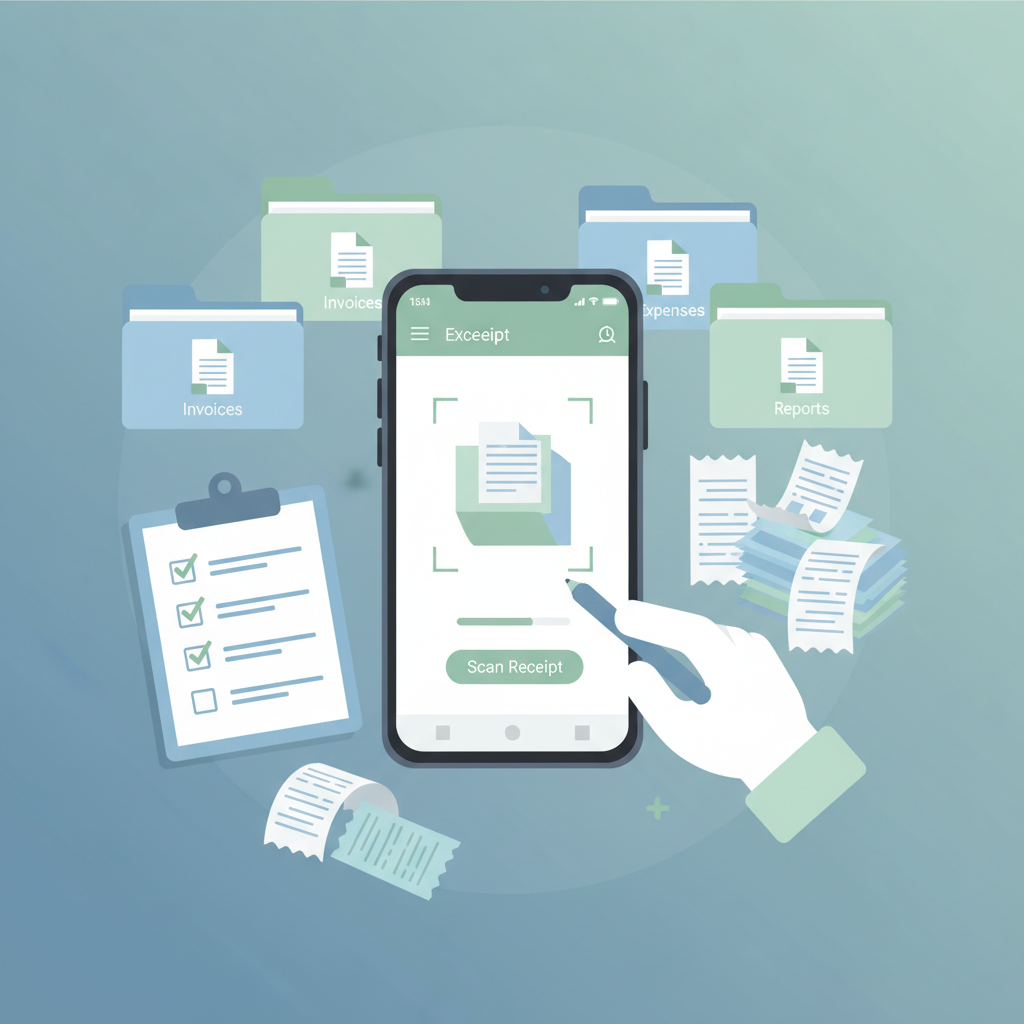
- Instant receipt scanning — Point your phone camera at any receipt and BudgetX extracts the vendor, date, amount, and category automatically using AI.
- Smart expense categorization — BudgetX automatically tags expenses by category (meals, travel, software, etc.) so your deductions are organized as you spend.
- Cloud backup — Every scanned receipt is stored securely in the cloud, IRS-compliant and retrievable at any time.
- Export-ready reports — Generate a full deduction summary with one tap — perfect for sharing with your accountant or preparing your estimated tax payment.
- Q2 deadline ready — Know your deductible expenses in real time so your June 15 payment is accurate, not a guess.
The average BudgetX user finds over $2,400 in additional deductions in their first month simply by capturing receipts they would have previously discarded or forgotten. For a small business in the 22% tax bracket, that’s more than $528 in tax savings from one month of organized receipt tracking.
Don’t let another deductible receipt slip through the cracks before the June 15 deadline.
Download BudgetX free — track every deductible receipt automatically