The calendar doesn’t lie: you have 31 days until June 15, 2026 — the Q2 estimated tax deadline for freelancers and self-employed workers. If you missed the Q1 deadline in April or you’re simply not prepared, the clock is ticking. But here’s the good news: 31 days is enough time to get everything right — if you start today.
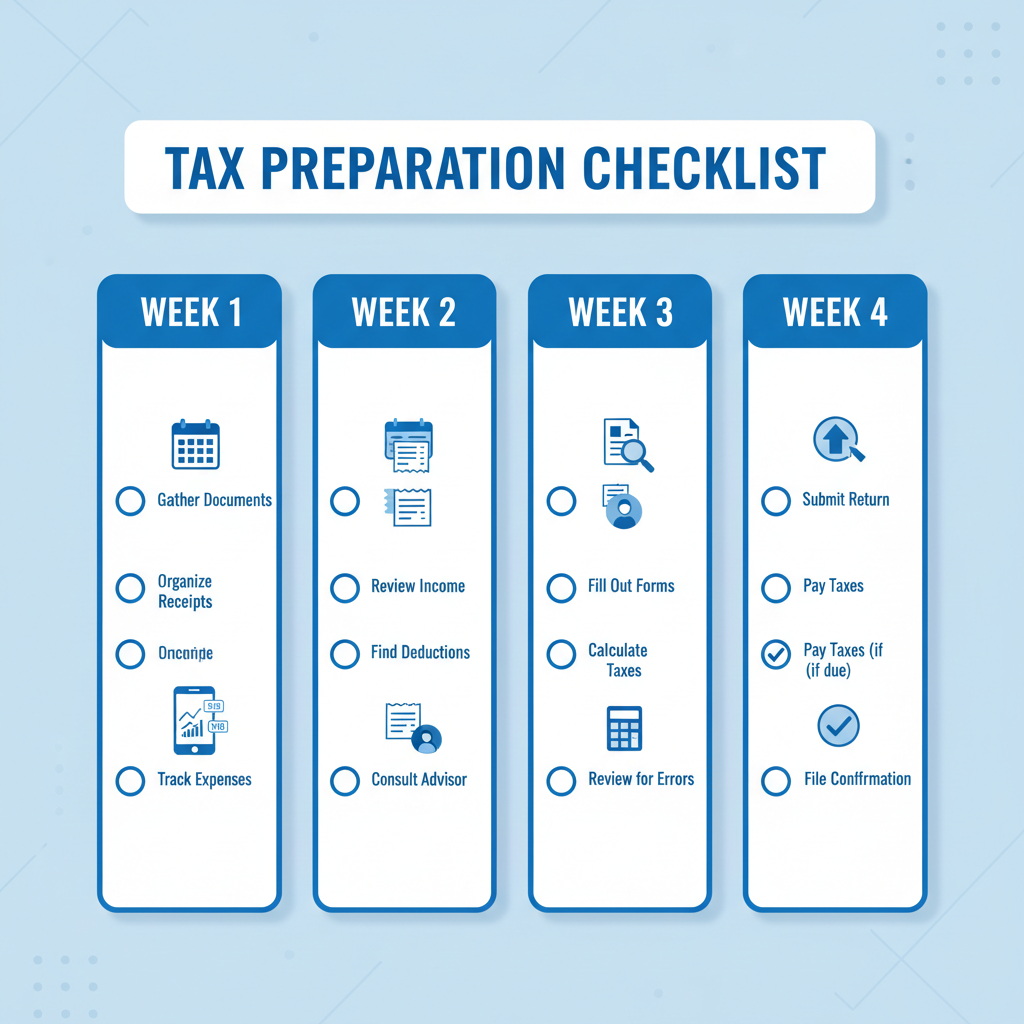
This guide gives you a week-by-week action plan to meet your June 15 quarterly tax payment deadline without penalties, stress, or last-minute scrambling. Let’s get into it.
Why the June 15 Deadline Matters
If you’re a freelancer, contractor, gig worker, or self-employed professional, the IRS expects you to pay taxes as you earn — not just at year-end. These quarterly estimated payments cover your federal income tax and self-employment tax (15.3% on net earnings).
The 2026 Q2 estimated tax deadline is June 15 — covering income earned from April 1 through May 31. Missing it triggers an IRS underpayment penalty calculated at the federal short-term interest rate plus 3 percentage points. That penalty compounds daily — and it adds up fast.
The safest way to avoid this? Pay at least as much as you owed last year (the safe harbor rule) or 90% of this year’s actual tax liability — whichever is smaller.
Week 1 (May 15–21): Gather All Q2 Income Records
You can’t calculate what you owe without knowing what you earned. Spend the first week pulling together every income source from April 1 – May 31:
- Invoices paid — Check your invoicing tool, PayPal, Venmo Business, Stripe, or bank statements.
- 1099 forms — If you’ve received any 1099-NECs from clients this year, pull those records.
- Side income — Rental income, affiliate commissions, course sales, or any taxable non-W-2 earnings.
- Platform payouts — Upwork, Fiverr, Etsy, Airbnb — log every disbursement.
Pro tip: Apps like BudgetX let you scan receipts and track income in real time, so you’re never starting from zero at quarter-end. If you’ve been using it, your Q2 income summary is already waiting for you.
By the end of Week 1, you should have a complete picture of your gross Q2 income.
Week 2 (May 22–28): Calculate Your Estimated Tax Using Safe Harbor
Now that you know what you earned, it’s time to calculate what you owe. There are two IRS-approved methods:
Method 1 — Safe Harbor (Easiest)
Pay at least 100% of last year’s total tax liability, divided into four equal quarterly payments. If your 2025 AGI was over $150,000, the threshold is 110%. This method protects you from penalties regardless of what you actually owe this year.
Method 2 — 90% of Current Year Liability (More Accurate)
Estimate your full-year 2026 income based on what you’ve earned so far, project your annual net profit, and pay 90% of that projected tax. Use IRS Form 1040-ES worksheets to run the calculation.
For most freelancers in stable income years, safe harbor is the smarter and simpler choice. It eliminates uncertainty and lets you focus on your work.
By the end of Week 2, you should have your Q2 payment amount determined and documented.
Week 3 (June 1–7): Track All Remaining Deductions
Before you finalize your payment, make sure you’re not overpaying by missing legitimate deductions. Common freelancer deductions that reduce your taxable income include:
- Home office deduction — Dedicated workspace qualifies under the IRS home office rules
- Equipment and software — Computers, cameras, design tools, SaaS subscriptions
- Internet and phone — Business-use percentage of your monthly bills
- Professional development — Courses, books, conference fees
- Business meals — 50% deductible with proper documentation
- Health insurance premiums — Self-employed individuals can deduct 100%
- Vehicle mileage — 70 cents per mile (2026 IRS standard rate) for business trips
Every receipt you can document is money back in your pocket. This is exactly where BudgetX earns its keep — scan receipts as you spend, and your deduction list builds itself throughout the quarter instead of leaving you hunting through emails and bank statements in Week 3.
By the end of Week 3, you should have your deductions logged, your net income confirmed, and your final Q2 payment amount locked in.
Week 4 (June 8–13): Make Your Payment — Don’t Wait Until June 15
Here’s a critical piece of advice that most guides skip: don’t pay on June 15 — pay by June 13. Here’s why:
- IRS Direct Pay and EFTPS can experience processing delays during peak periods
- Bank processing times vary by institution
- A single technical hiccup on June 15 means you miss the deadline and owe penalties
Build in a 2-day buffer. Use one of these IRS-approved payment methods:
IRS Direct Pay (Free)
Visit IRS Direct Pay — no account registration required. You’ll need your prior year tax return for identity verification. Funds are pulled directly from your bank account.
EFTPS (Electronic Federal Tax Payment System)
EFTPS requires advance registration (takes 5–7 days to activate), but it’s the most reliable method for quarterly payers. If you’re not already enrolled, register now so you’re ready for Q3 in September.
IRS2Go App
The official IRS2Go mobile app lets you pay via Direct Pay from your phone. Quick and convenient for freelancers on the go.
Make your payment, save your confirmation number, and you’re done.
What Happens If You Miss the June 15 Deadline?
The IRS charges an underpayment penalty — currently calculated at the federal short-term rate plus 3%. While this isn’t catastrophic for small amounts, it’s money you don’t need to give away. More importantly, repeated underpayments across all four quarters can result in a significant penalty at tax time.
If you know you’ll miss June 15, pay as much as you can as soon as possible. Partial payments reduce the penalty. Do not wait until your annual return to settle up.
Make Every Quarter Easier With BudgetX
The reason quarterly taxes feel stressful is almost always the same: the recordkeeping wasn’t done in real time. When receipts pile up in shoeboxes and income lives across six different platforms, every quarter becomes a scramble.
BudgetX solves this at the root. Snap a receipt, and the app automatically extracts the amount, category, and merchant — adding it to your expense record instantly. Your Q2 summary, deduction list, and income tracker are always current. No scrambling. No missed deductions. No 3 a.m. bank statement archaeology.
If you start using BudgetX today, your Q3 estimated tax payment (due September 15) will be the smoothest one you’ve ever made.
Your June 15 Action Plan — At a Glance
| Week | Dates | Action |
|---|---|---|
| Week 1 | May 15–21 | Gather all Q2 income records |
| Week 2 | May 22–28 | Calculate estimated tax (safe harbor method) |
| Week 3 | June 1–7 | Log all remaining deductions |
| Week 4 | June 8–13 | Pay via IRS Direct Pay or EFTPS |
Thirty-one days is enough time to handle this the right way. Start Week 1 today — gather your Q2 income records, open BudgetX, and put June 13 on your calendar as your personal payment deadline.
The freelancers who stay ahead of quarterly taxes don’t necessarily earn more — they just track better.
Stop scrambling before every tax deadline. BudgetX scans your receipts in seconds, tracks all your business expenses automatically, and keeps your deduction list ready year-round. Download BudgetX free and start Q3 the right way.