29 Days Until June 15: The Freelancer’s Complete Sunday Tax Prep Checklist
29 Days Until June 15: What Every Freelancer Must Do This Sunday (Before Monday Closes Your Window)
Sunday mornings feel relaxed — coffee, quiet, no client emails. But if you’re a freelancer, this Sunday carries a quiet urgency: you have exactly 29 days until the IRS Q2 estimated tax deadline on June 15, 2026. That’s less than a month to calculate what you owe, round up receipts, and make sure your payment lands on time. Miss it, and you’re looking at penalties that chip away at the profits you worked all quarter to earn. This Sunday is your window. Here’s exactly what to do before Monday arrives.
Why the June 15 Deadline Is Non-Negotiable for Freelancers
If you’re self-employed — freelancer, consultant, gig worker, sole proprietor — you don’t have an employer withholding taxes from your paycheck. That means the IRS requires you to pay estimated taxes quarterly. Q2 covers income earned from April 1 through May 31, and it’s due June 15. If you owe more than $1,000 in taxes for the year and underpay your quarterly installments, the IRS charges a penalty calculated daily on the amount underpaid. In 2026, that rate is 8%. This Sunday is your best shot at getting organized while there’s still enough time to act.
Your Complete Sunday Tax Prep Checklist (7 Steps)
1. Calculate Your Q2 Income to Date
Open your bank statements, PayPal, Venmo Business, Stripe, or any platform where clients pay you. Add up every dollar earned from April 1 through May 16. Don’t guess — go line by line. This is your gross self-employment income for Q2. Write it down somewhere you’ll reference in the next six steps. If you invoice clients, check which invoices were paid (not just sent) within this window, since cash-basis accounting — what most freelancers use — counts money when received.
Action: Open your bank account + payment platform → filter April 1–today → sum all client payments.
2. Estimate Your Self-Employment Tax Owed (15.3%)
Self-employment tax covers Social Security (12.4%) and Medicare (2.9%), totaling 15.3% of your net self-employment income. Unlike employees who split this with their employer, freelancers pay the full amount. According to the IRS Publication 505, you can deduct half of your SE tax as an above-the-line deduction, but for planning purposes, calculate 15.3% on 92.35% of your net income (the IRS multiplier).
Formula: (Net Income × 0.9235) × 0.153 = Self-Employment Tax Estimate
Action: Plug your Q2 net income into this formula. Add this to your federal income tax estimate to get your total Q2 tax liability.
3. Review Deductible Expenses From April–May
Every legitimate business expense reduces your taxable income, which reduces both your income tax and your self-employment tax. Common freelancer deductions include: home office (if you have a dedicated workspace), software subscriptions, equipment purchases, client meals (50% deductible), phone/internet (business-use percentage), professional development courses, and health insurance premiums. Go through your April and May bank and credit card statements category by category.
Action: Export or screenshot April–May statements → highlight every business expense → total them up → subtract from gross income.
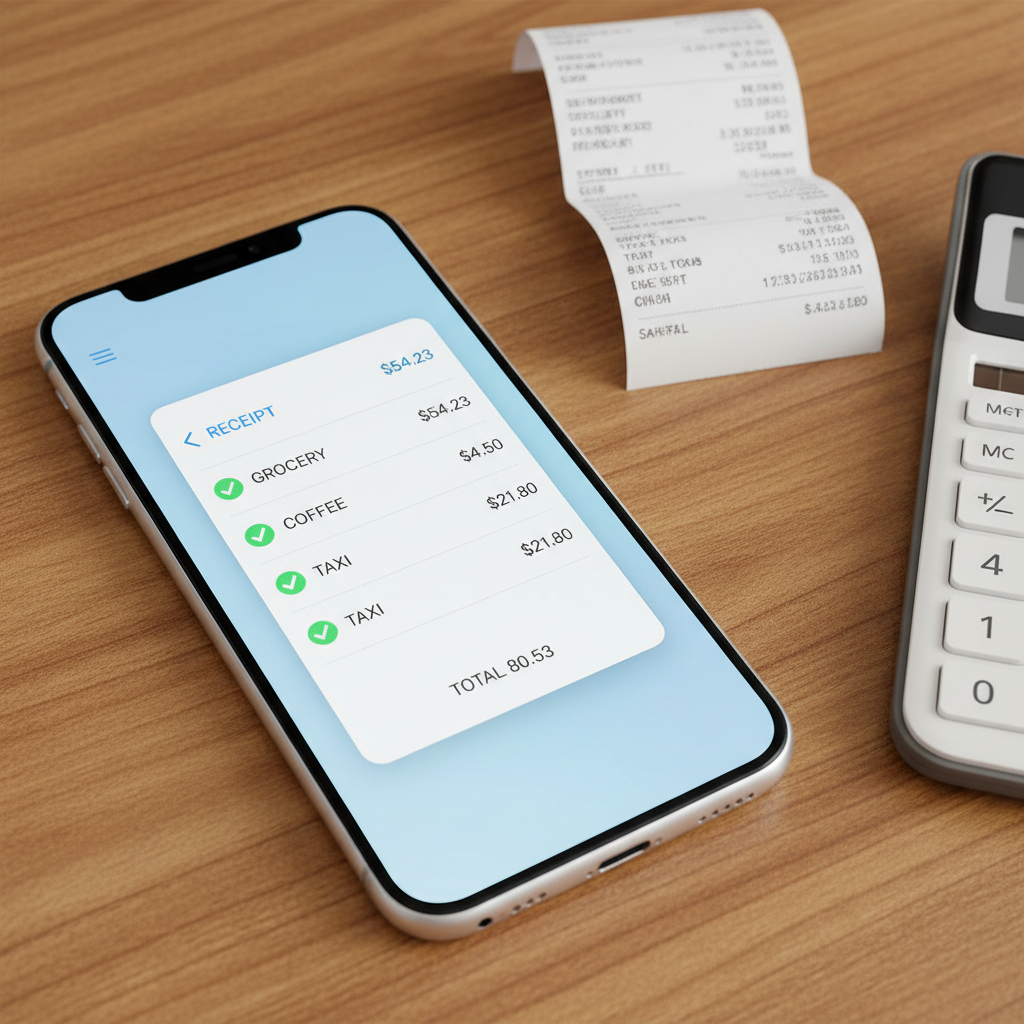
4. Scan and Organize Any Paper Receipts
Physical receipts fade. Paper piles disappear. If you still have paper receipts sitting in your wallet, car, or desk drawer from the last two months, this Sunday is the time to digitize them. The IRS requires you to keep records supporting your deductions, and a photo on your phone or a digital file counts — as long as it’s clear and legible.
Use a receipt scanning app to capture, categorize, and store receipts in under 30 seconds each. Don’t let a $47 business lunch or a $200 equipment purchase disappear because the paper faded.
Action: Gather all paper receipts → scan each one → confirm they’re categorized correctly → verify totals match your expense list from Step 3.
Download BudgetX free — scan receipts in 3 seconds and auto-categorize your deductions.
5. Set Aside 25–30% of Net Profit for the June 15 Payment
If you haven’t already separated your tax money, do it today. Open a separate savings account (or just mentally earmark funds) and move 25–30% of your Q2 net profit. This covers federal income tax plus self-employment tax for most freelancers in mid-range income brackets. If you’re in a higher bracket or live in a state with income tax, bump this to 30–35%. The exact figure from your calculation in Step 2 is your target — use that number, not a rough estimate.
Action: Transfer your estimated tax amount to a separate savings account → label it “Q2 Tax Payment — Due June 15.”
6. Schedule Your EFTPS or IRS Direct Pay Reminder
You have two main options for paying federal estimated taxes: EFTPS (Electronic Federal Tax Payment System) or IRS Direct Pay. Both are free. EFTPS requires advance enrollment (up to 5 business days to get your PIN in the mail), so if you’re not already enrolled, use IRS Direct Pay. Set a phone reminder for June 13 (Saturday) so you’re not scrambling at the last minute if something comes up on June 15.
Action: Go to IRS Direct Pay or log into EFTPS → schedule payment for June 13–15 → set phone reminder for June 13 as backup.
7. Review Your Q1 Payment Confirmation
Pull up your Q1 estimated tax payment (due April 15) and confirm it was processed. Check your bank statement or your EFTPS payment history. If Q1 was underpaid or missed, you may already be accruing penalties — and factoring this into your Q2 payment strategy matters. You can make a larger Q2 payment to help offset some of the Q1 shortfall, though the penalty on Q1 is already calculated from April 15.
Action: Log into EFTPS or IRS Direct Pay → verify Q1 payment posted → screenshot or save confirmation for your records → note the amount paid.
One More Thing: Your Q3 Deadline Is September 15
Once you’ve handled Q2 this Sunday, put September 15 on your calendar right now. That’s the Q3 estimated tax deadline, and the same preparation process applies. Freelancers who build a quarterly tax routine — one focused Sunday every three months — almost never get hit with penalties. It’s not complicated; it just requires showing up.
The Bottom Line: 29 Days Is Plenty — If You Start Today
You have 29 days until June 15. That’s enough time to calculate, organize, and pay — but not enough time to keep procrastinating. This Sunday, run through these seven steps. It takes two to three hours if you’re organized, and a bit longer if you’re catching up on receipts. Either way, it’s infinitely better than the alternative: a penalty notice from the IRS in July.
The freelancers who hit June 15 prepared aren’t doing anything magical. They’re just doing this checklist on a Sunday before the deadline instead of after it.
Stop overpaying taxes because of missing receipts.
Download BudgetX free — scan receipts in seconds, auto-track deductions, and walk into every tax deadline prepared.