If you made the switch from a salaried job to freelancing — or if you’re just starting out as an independent contractor — you may have discovered the hard way that your tax situation changed dramatically. The difference between being a W-2 employee and a 1099 independent contractor isn’t just a paperwork distinction. It can mean thousands of dollars in additional taxes, missed deductions, and painful surprises at tax time.
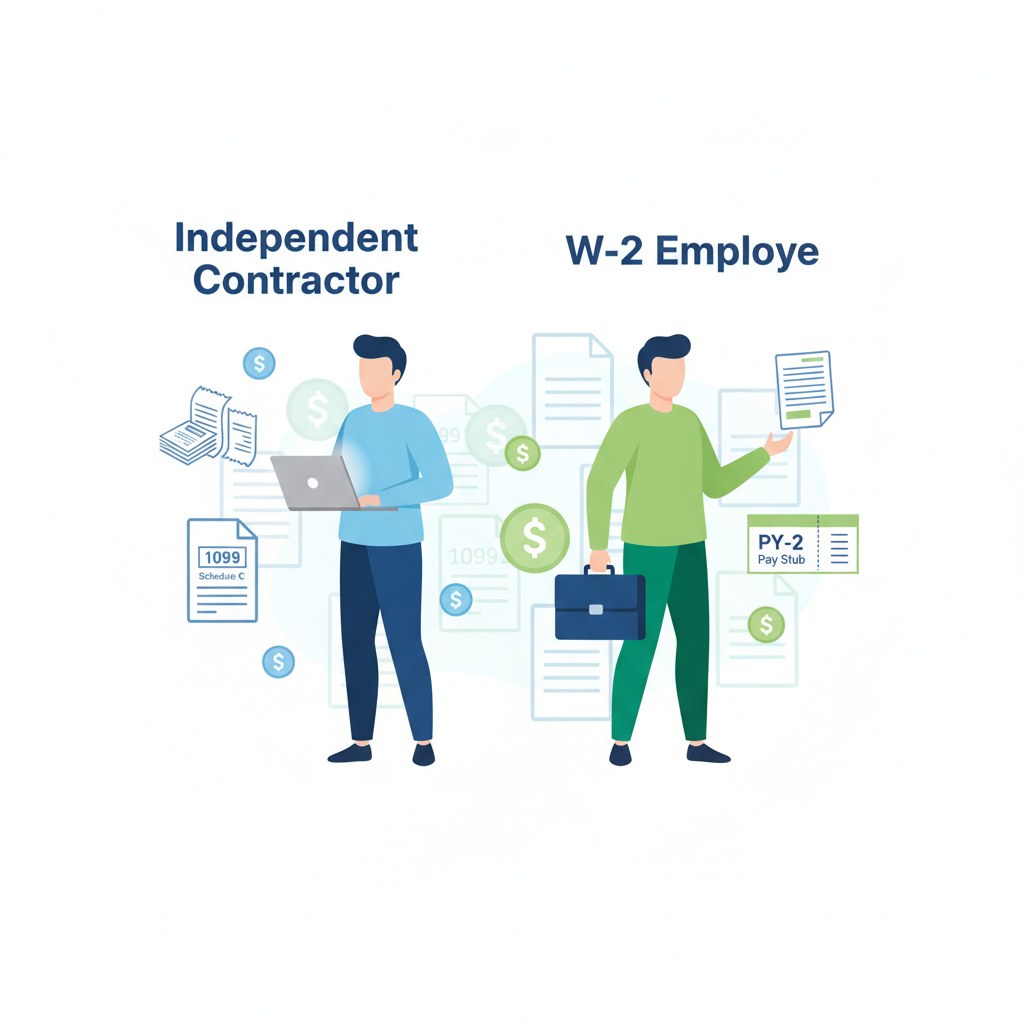
This guide breaks down exactly what changes when you go independent — and how to make sure you keep more of what you earn.
The Big One: Self-Employment Tax
When you’re a W-2 employee, your employer pays half of your Social Security and Medicare taxes (known as FICA taxes). The split is 7.65% each — meaning you pay 7.65% and your employer matches it. Easy, automatic, invisible.
As an independent contractor, you pay both halves. That’s a 15.3% self-employment tax on top of your regular income tax. On $80,000 of net self-employment income, that’s $12,240 in SE tax alone — before a single dollar of federal income tax is calculated.
The silver lining: you can deduct half of your self-employment tax from your gross income. But you have to know to claim it, and it still leaves a significant bill compared to your W-2 days. The IRS provides detailed guidance on self-employment tax calculations — it’s worth a read before you file.
Quarterly Estimated Tax Payments
As a W-2 employee, taxes were withheld from every paycheck. You probably never had to think about when taxes were due because they were already handled.
As an independent contractor, that automatic withholding disappears. The IRS expects you to pay taxes as you earn — which means making quarterly estimated tax payments four times per year.
The 2026 deadlines are:
- Q1 (Jan–Mar): April 15, 2026
- Q2 (Apr–Jun): June 16, 2026 — coming up fast
- Q3 (Jul–Sep): September 15, 2026
- Q4 (Oct–Dec): January 15, 2027
Miss a quarterly payment — or underpay — and the IRS charges underpayment penalties, even if you pay everything you owe by April 15. With the Q2 deadline on June 16, 2026 just weeks away, now is the time to total up your Q2 earnings and make sure your payment is on track.
A common rule of thumb: set aside 25–30% of every client payment in a separate account earmarked for taxes. This keeps the money available when quarterly deadlines hit and prevents the sinking feeling of owing a large sum you don’t have.
Deductions: Where Contractors Have a Real Advantage
Here’s the good news. Independent contractors have access to a range of business deductions that W-2 employees simply cannot claim. These can dramatically reduce your taxable income — but only if you track your expenses carefully.
Home Office Deduction
If you use part of your home exclusively and regularly for business, you can deduct a proportional share of your rent or mortgage interest, utilities, and internet. A freelancer using a 150 sq ft dedicated office in a 1,500 sq ft apartment can deduct 10% of qualifying home expenses.
Health Insurance Premiums
Self-employed individuals can deduct 100% of health, dental, and vision insurance premiums paid for themselves and their families — a deduction W-2 employees can’t take above the line.
Business Equipment and Software
Laptop, phone, software subscriptions, professional memberships — if they’re used for business, they’re deductible. Under Section 179, you can often deduct the full cost of equipment in the year it’s purchased rather than depreciating it over time.
Vehicle and Mileage
Client visits, supply runs, coworking commutes — any business-related driving is deductible. For 2026, the IRS standard mileage rate is 70 cents per mile. Keep a log of every trip.
Professional Development
Courses, conferences, books, and coaching that maintain or improve your skills in your current field are fully deductible as business expenses.
Why Receipt Tracking Matters More for Contractors
A W-2 employee doesn’t need to save receipts for work expenses — most of the time, they can’t deduct them anyway. As an independent contractor, every receipt is potentially money back in your pocket.
But the IRS requires documentation. A bank statement line item that says “Amazon” doesn’t prove the purchase was a business expense. You need the actual receipt showing what was bought. Without documentation, deductions get denied — and audits get expensive.
The contractors who come out ahead at tax time are the ones who capture receipts in real time, not the ones who try to reconstruct twelve months of expenses in April. Tools that let you scan and categorize receipts the moment you receive them — whether paper or digital — are the difference between claiming every deduction you’re entitled to and leaving money with the IRS.
Specifically, you want to track:
- Software and app subscriptions used for work
- Office supplies and equipment purchases
- Client meals and entertainment (50% deductible)
- Travel expenses (flights, hotels, rental cars for business trips)
- Marketing and advertising costs
- Bank fees on business accounts
The Bottom Line: Know What You Owe Before the IRS Does
The tax gap between independent contractors and W-2 employees is real, but it’s manageable if you plan for it. The self-employment tax adds 15.3% to your effective rate. Quarterly payments prevent penalties. And business deductions — when properly documented — can offset a significant portion of that additional burden.
The freelancers who get blindsided at tax time are almost always the ones who didn’t track expenses or didn’t set money aside throughout the year. The ones who come out ahead treat every receipt as a tax document — because for contractors, that’s exactly what it is.
With the June 16 Q2 deadline approaching, there’s no better time to get your tracking system in order. Start capturing every business receipt today so you have clean records when it’s time to calculate your estimated payment.
BudgetX scans receipts in seconds, auto-categorizes your expenses, and keeps your records audit-ready year-round.